
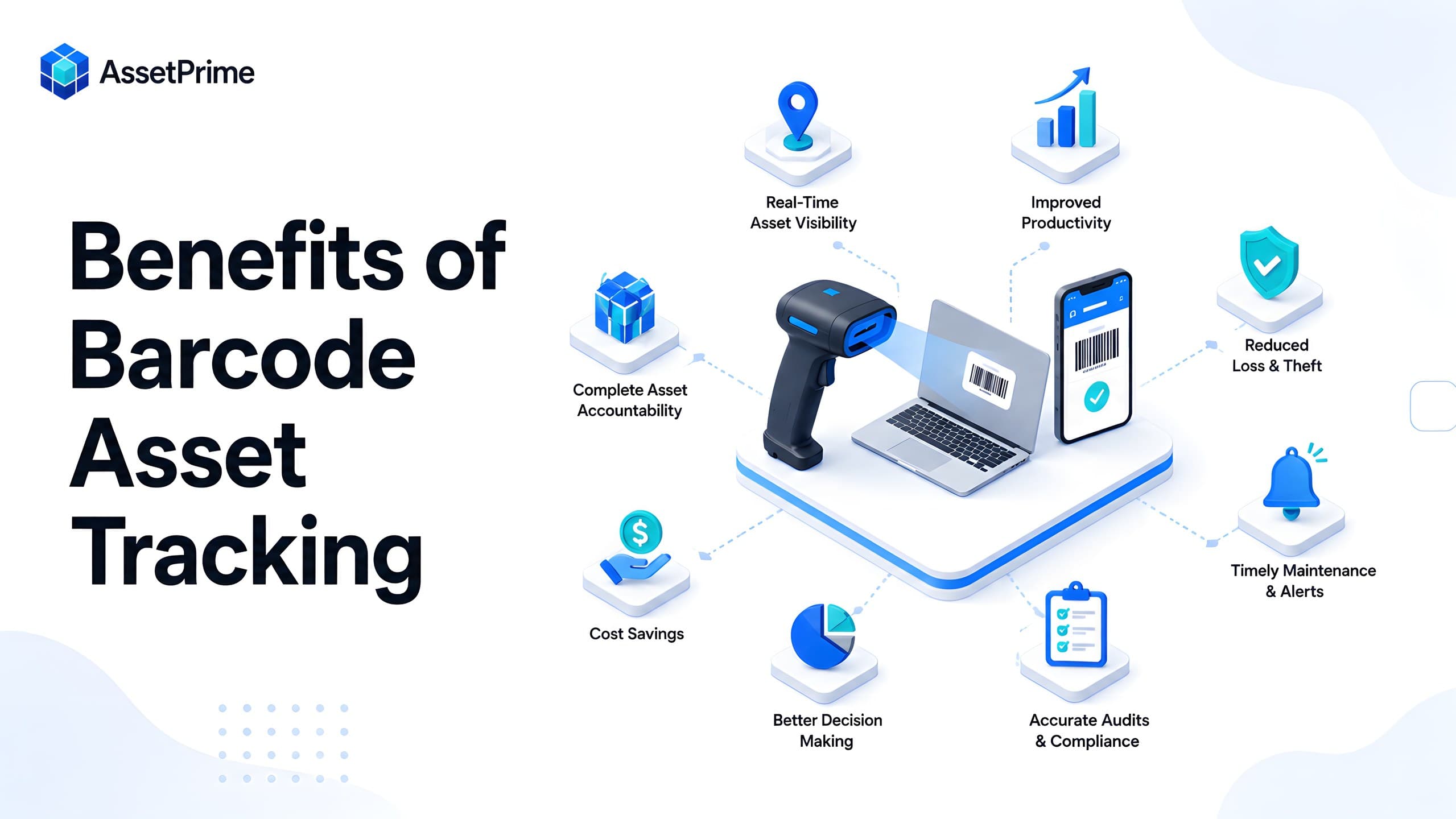
Why barcode asset tracking matters
Barcode asset tracking gives every physical asset a fast, consistent identity that can be scanned during receiving, assignment, movement, maintenance, audit, and disposal. Instead of searching long spreadsheets or typing serial numbers manually, users scan a label and open the correct asset record.
The benefit is not the barcode image alone. The real value comes from connecting the scan to an asset management system that knows the asset code, category, serial number, branch, location, custodian, condition, purchase details, coverage, maintenance history, and lifecycle status.
For organizations managing hundreds or thousands of assets, this connection reduces uncertainty. Teams can verify what they own, where it is, who is responsible, and what action is required without depending on memory or fragmented files.
“You cannot control assets clearly when ownership, location, maintenance, and audit history live in separate files.”
1. Faster and more accurate asset identification
Asset names are often similar. A company may own hundreds of identical laptops, monitors, pumps, tools, beds, scanners, or office chairs. Visual recognition is not enough to distinguish one unit from another, especially when model numbers repeat.
A unique barcode turns each serialized asset into a specific digital record. Scanning avoids typing long asset codes and serial numbers, reducing errors caused by transposed digits, spelling differences, or selecting the wrong item from a list.
Accurate identification improves every downstream process because movement, maintenance, assignment, audit, warranty, and disposal records are attached to the correct asset.
What strong asset control should make visible
- ✓Where each asset is located today.
- ✓Who is responsible for the asset.
- ✓When it was purchased, moved, maintained, or disposed.
- ✓Which records are ready for audit, reporting, and decision-making.
2. Faster physical asset audits
Physical audits are slow when teams compare printed lists with assets one by one. They must read labels, search records, mark findings, and later reconcile notes. This creates repetitive work and increases the chance of missed or duplicated verification.
With barcode tracking, auditors can scan each asset, confirm its expected location and condition, and record exceptions immediately. The system can distinguish verified, missing, misplaced, damaged, unregistered, or duplicate items.
This shortens the verification cycle and produces a cleaner audit trail. Management receives a structured exception report instead of handwritten notes that require additional interpretation.
3. Better location visibility across branches
Assets frequently move between branches, buildings, floors, departments, rooms, stores, project sites, and service centers. When location changes are recorded only through emails or spreadsheet edits, the register quickly becomes unreliable.
Barcode scanning can make movement recording part of the actual transfer. A user scans the asset, selects the destination, records the movement type, and submits the transaction. The current location and movement history are updated together.
This is especially valuable for multi-branch organizations because teams can see both where an asset is now and how it reached that location.
4. Stronger employee and department accountability
Movable assets often disappear from operational visibility because responsibility is unclear. A laptop may be with an employee, a tool with a technician, or shared equipment with a department, but the central register may show only a general location.
Barcode-based assignment allows the asset to be scanned when issued, transferred, or returned. The system records the custodian, assignment date, expected return information, and return condition.
Clear custody records support employee exits, departmental transfers, damage investigations, and periodic verification. Accountability becomes based on recorded transactions rather than informal assumptions.
5. Reduced manual entry and data errors
Manual asset tracking requires users to repeatedly type asset codes, serial numbers, locations, and status information. The more often data is re-entered, the greater the risk of duplicates, incorrect identifiers, and updates to the wrong record.
Barcode scanning replaces much of this repetitive input with a controlled lookup. Required fields and workflow rules can then guide the user through the remaining action, such as selecting a destination, condition, maintenance status, or assignee.
Cleaner input improves reporting accuracy because the underlying transactions are tied to validated master records.
6. More reliable movement history
Editing the current location field does not create a true movement trail. It shows the latest value but loses the source, destination, date, reason, and responsible user behind the transfer.
A barcode movement workflow can preserve every transfer as a separate transaction. Internal transfer, service out, service return, assignment, return, disposal, loss, and retirement can each have distinct controls and approvals.
This history helps teams investigate missing assets, confirm service movements, understand utilization, and demonstrate control during audits.
7. Improved maintenance and service records
Maintenance teams may service similar-looking equipment in the same area. If they select the wrong record, service dates, costs, parts, condition, and technician notes may be attached to another asset.
Scanning the barcode before opening or closing a maintenance task confirms the exact unit. The technician can review warranty or AMC coverage, previous repairs, open issues, and current location before updating the work.
Accurate service history supports preventive maintenance planning, recurring-failure analysis, replacement decisions, and total cost evaluation.
8. Better warranty, AMC, and insurance control
Coverage information often exists in invoices, contracts, emails, and separate spreadsheets. Even when expiry dates are recorded, teams may struggle to connect a service request or claim to the correct covered asset.
A barcode scan can open the asset record and show warranty, annual maintenance contract, or insurance details immediately. Users can confirm expiry dates, provider information, contract references, and supporting documents before approving paid work.
This reduces avoidable service costs and helps organizations act before coverage expires.
9. Lower risk of asset loss and misplacement
Barcode tracking cannot physically prevent an asset from moving, but it creates stronger controls around identity, custody, location, and verification. Assets that are regularly scanned during workflows are less likely to become invisible in the register.
When an item is not found, teams can review its last confirmed location, assignment, movement, service transaction, and audit result. This narrows the investigation and helps distinguish a data problem from an actual loss.
Visible labels also remind users that the asset is controlled and traceable, which can improve handling discipline.
10. Faster receiving and asset registration
New assets often arrive in batches. Manually creating records, assigning codes, printing labels, and confirming placement can delay deployment and create gaps between procurement records and physical assets.
A structured barcode process links receiving with registration. Teams can create serialized instances or bulk stock records, print labels, verify serial numbers, assign initial locations, and attach purchase documents before the assets enter use.
This establishes accurate lifecycle data from day one instead of attempting to reconstruct it later.
11. Support for serialized and bulk asset models
Not every asset should be tracked in the same way. High-value or movable units usually need serialized tracking, where each physical item has its own identity and history. Other assets may be managed as quantities by branch and location.
Barcode systems can support both models when the underlying software is designed correctly. Serialized assets can receive unique labels, while bulk assets can use category, batch, package, or location-oriented scanning depending on the workflow.
The important decision is to match the tracking level to operational risk, value, mobility, compliance, and maintenance requirements.
12. More consistent data across teams
Finance, IT, administration, procurement, facilities, maintenance, and department managers often maintain different versions of asset information. Conflicting records make reporting and audits difficult.
Barcode workflows encourage each team to update one central asset record through controlled transactions. Purchase data, physical location, custody, maintenance, coverage, depreciation, and disposal information can remain connected.
A shared system of record reduces reconciliation work and gives management a more reliable view of the asset portfolio.
13. Stronger audit trails and compliance evidence
Organizations need more than a current asset list. They may need to demonstrate who created or changed records, when assets moved, who verified them, what exceptions were found, and how those exceptions were resolved.
Barcode-enabled workflows can record users, dates, locations, actions, notes, and status changes automatically. This creates evidence that controls were performed rather than relying on retrospective explanations.
Although compliance requirements differ by industry, traceable asset activity generally improves governance and audit readiness.
14. Better reporting and decision-making
Accurate scans improve the data used in asset reports. Management can review assets by branch, location, category, status, custodian, condition, maintenance state, coverage, and lifecycle stage with greater confidence.
Reliable reports help identify underused assets, repeated movements, overdue maintenance, expiring coverage, verification gaps, and assets approaching replacement or disposal.
The benefit extends beyond operational convenience. Better asset data supports budgeting, procurement planning, risk control, and capital allocation.
Barcode tracking compared with manual asset tracking
Manual tracking depends on users reading labels, locating the correct row, and typing updates consistently. It is inexpensive to start but becomes slow and difficult to control as asset volume, locations, and users increase.
Barcode tracking speeds up identification and makes transactions more structured. It does not remove the need for good policies, clean master data, user training, and physical controls, but it makes those controls easier to apply at scale.
The strongest approach combines durable labels, clear asset coding, mobile or scanner access, role-based permissions, and a centralized lifecycle system.
How to measure the return from barcode asset tracking
Organizations can measure impact through audit hours, missing-asset investigations, duplicate purchases, manual data corrections, overdue maintenance, coverage-related costs, and the time required to locate assets.
A baseline should be captured before implementation. After rollout, compare verification speed, exception rates, record accuracy, movement compliance, and asset recovery performance over several audit cycles.
The return is often distributed across departments, so evaluation should include operational time, finance accuracy, maintenance efficiency, compliance effort, and avoided purchases rather than only label and scanner costs.
How AssetPrime supports barcode asset tracking
AssetPrime connects barcode identity with asset registration, serialized instances, bulk stock, branches, hierarchical locations, assignments, movements, maintenance, warranty, AMC, insurance, depreciation, documents, audits, and disposal.
Users can print asset labels and use barcode-driven workflows to locate the correct record during operational tasks. Role-based access and location scope help ensure that teams see and update only the assets relevant to them.
The Asset Intelligence Console brings lifecycle information together so a scan leads to more than a name and location. It provides context for custody, service, financial, coverage, movement, and audit decisions.
Best practices for maximizing barcode benefits
Start with unique asset codes and clean category, branch, location, department, and user masters. Poor master data will limit the value of even the best scanning process.
Choose label materials and placement based on heat, moisture, cleaning chemicals, abrasion, outdoor exposure, and expected asset life. Test labels on representative equipment before printing at scale.
Make scanning part of daily workflows, define exception ownership, train users by role, and review adoption metrics. Barcode tracking produces lasting value when it becomes the normal way assets are received, moved, assigned, serviced, audited, and retired.
Final thoughts
The benefits of barcode asset tracking extend far beyond faster scanning. It improves identification, location control, custody, maintenance accuracy, audit speed, reporting, and lifecycle visibility.
Barcodes are most effective when they are connected to a complete asset management platform and supported by clear operational processes. A label without disciplined transactions remains only an identifier.
For growing organizations, barcode tracking provides a practical and scalable foundation for reliable asset control across people, departments, branches, and locations.
Related AssetPrime Pages
Continue with related pages
Explore connected features, guides, solutions, and industry pages that support this topic.
FAQ
Frequently asked questions
What are the main benefits of barcode asset tracking?
The main benefits include faster asset identification, fewer data-entry errors, quicker audits, better location and custody visibility, stronger movement history, more accurate maintenance records, and improved reporting.
How does barcode tracking reduce asset loss?
It creates traceable identity, assignment, movement, location, and audit records. When an asset is missing, teams can review its last confirmed transaction and responsible custodian instead of starting with no evidence.
Can barcode asset tracking save money?
Yes. Savings may come from reduced audit labor, fewer duplicate purchases, faster asset recovery, better warranty use, improved maintenance decisions, and lower administrative effort.
Does barcode tracking improve audits?
Yes. Auditors can scan assets, compare physical findings with system records, record exceptions immediately, and produce structured reconciliation reports.
Can smartphones be used for barcode asset tracking?
Yes, many modern systems support barcode scanning through compatible mobile devices or browser-based workflows. Dedicated scanners may still be preferred for high-volume or harsh environments.
Is barcode tracking suitable for fixed assets?
Yes. It is widely used for IT equipment, machinery, medical devices, tools, furniture, facility assets, and other fixed or movable business assets.
Can barcodes track assets across multiple branches?
Yes, when scans are connected to branch and location-aware movement workflows. The system should preserve both the current location and complete transfer history.
What is the difference between barcode and QR asset tracking?
Both can identify assets. Traditional barcodes are simple and widely supported, while QR codes can hold more data and are easy to scan with phone cameras. The software workflow is more important than the symbol type.
Do bulk assets need individual barcodes?
Not always. High-risk or high-value units usually need unique labels, while low-value bulk assets may be tracked by quantity, batch, package, or location depending on operational needs.
How does AssetPrime support barcode tracking?
AssetPrime connects barcode labels with registration, bulk and serialized tracking, branches, locations, assignments, movements, maintenance, coverage, audits, depreciation, documents, and disposal history.
Continue Reading
Related articles
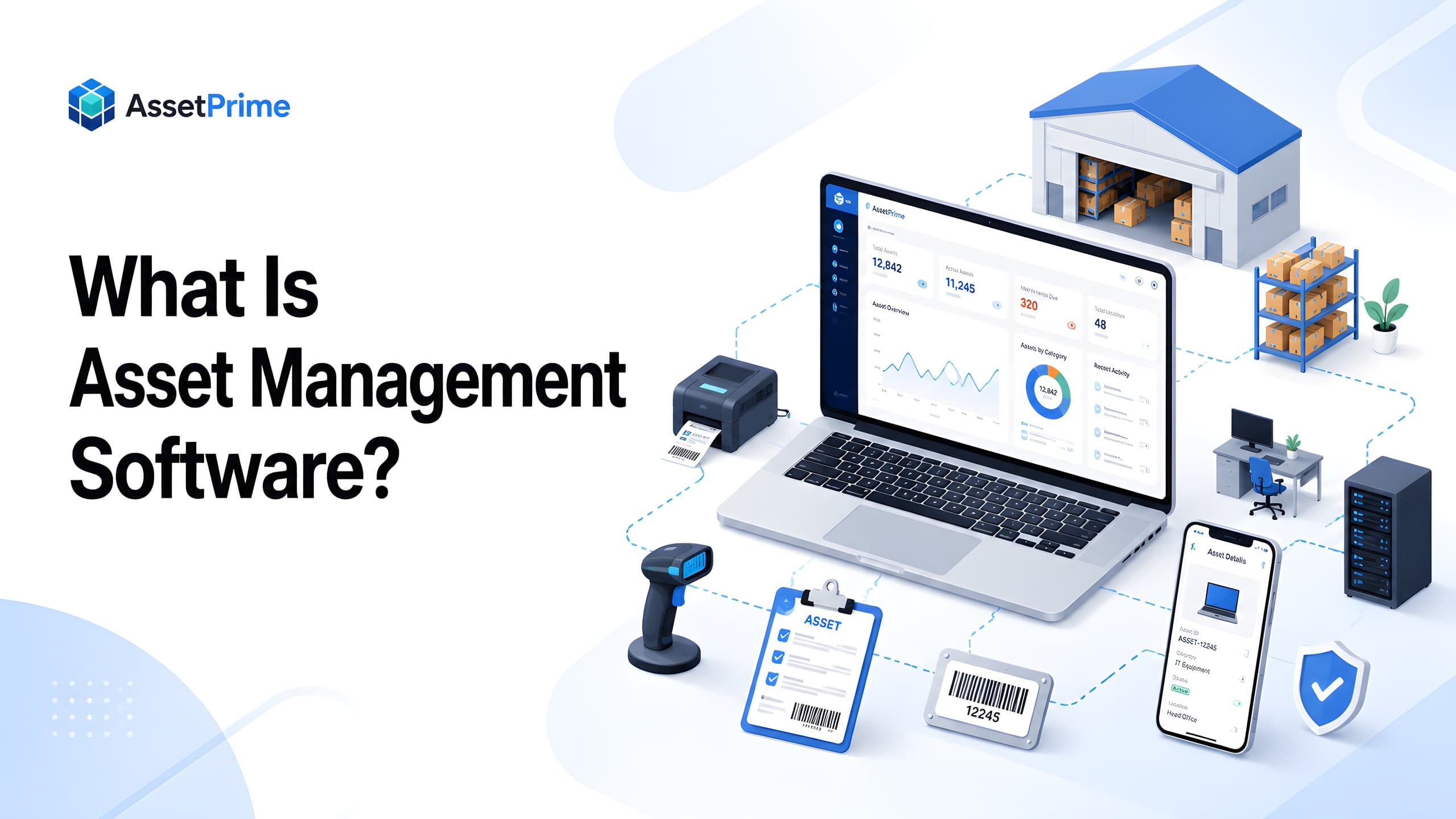
Asset Management
What Is Asset Management Software? A Complete Guide for Modern Organizations
Read Article →
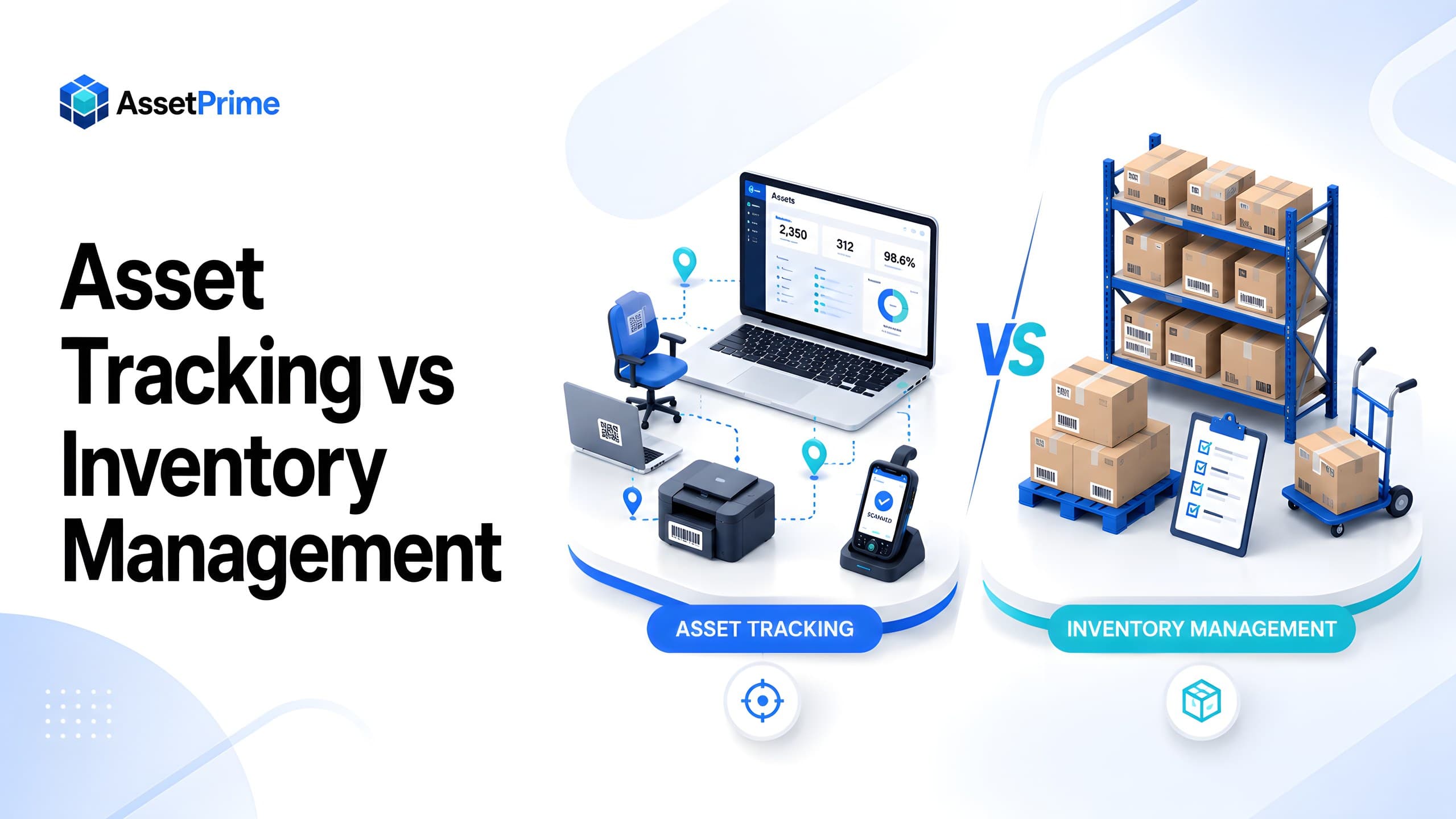
Asset Tracking
Asset Tracking vs Inventory Management: Key Differences for Modern Businesses
Read Article →
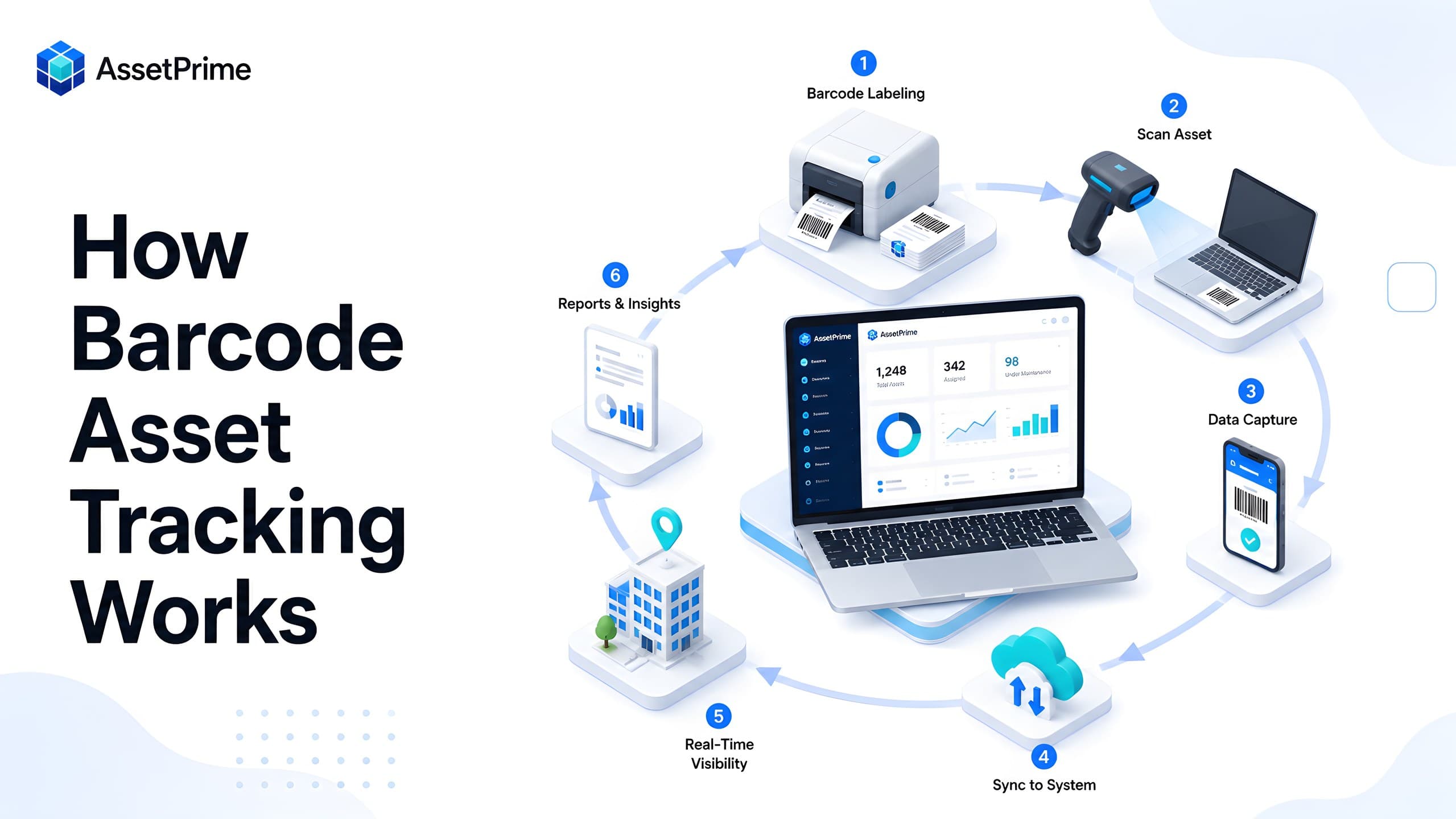
Barcode Tracking
How Barcode Asset Tracking Works: A Complete Guide for Modern Asset Operations
Read Article →