
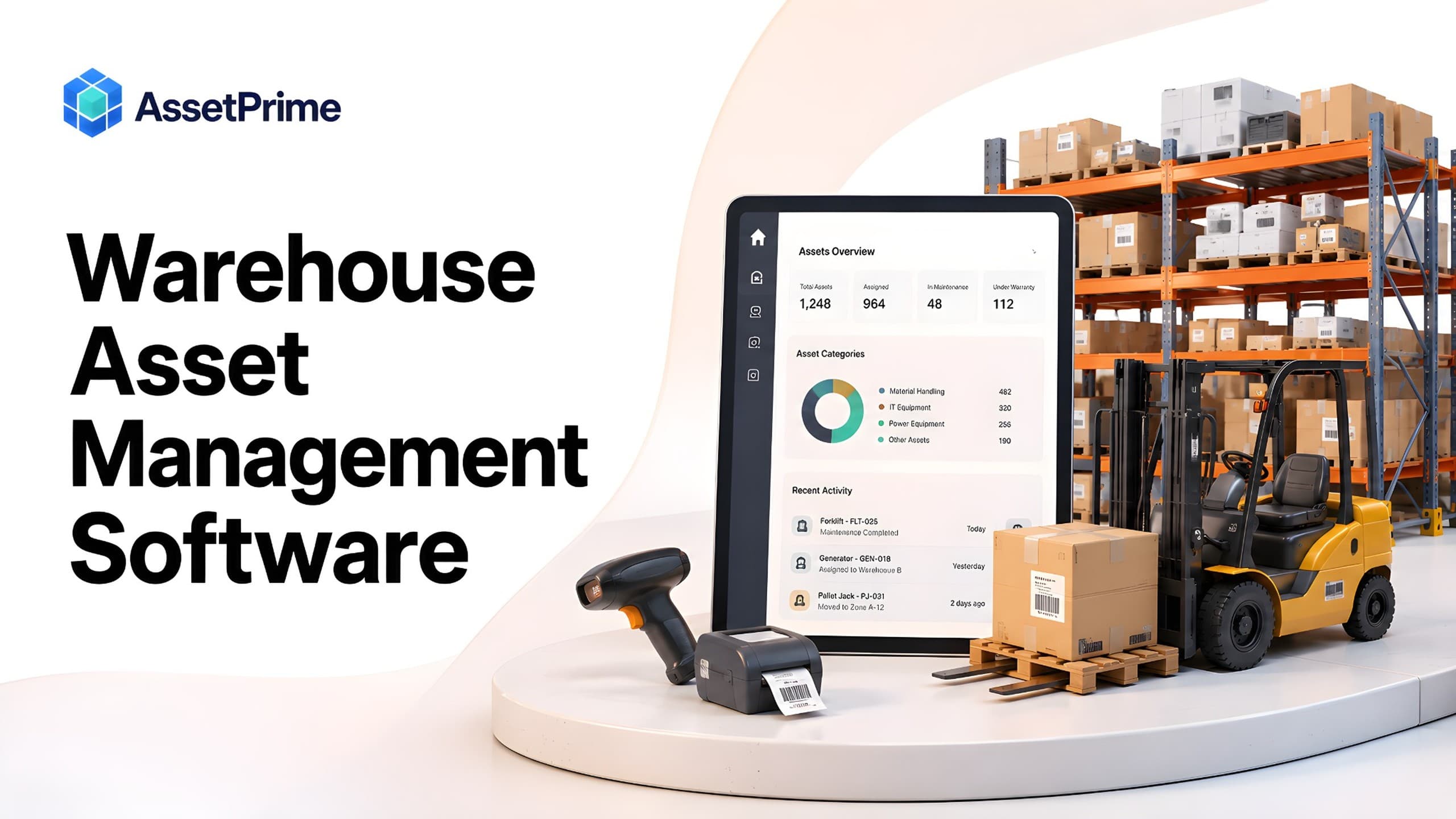
What is warehouse asset management?
Warehouse asset management is the structured process of identifying, locating, controlling, maintaining, auditing, and reviewing the physical assets used to operate a warehouse. Typical assets include forklifts, pallet trucks, barcode scanners, label printers, weighing equipment, computers, tools, safety equipment, generators, batteries, chargers, and facility equipment.
Unlike inventory, these assets are normally long-lived operational resources. Warehouse asset management software connects each asset with its current location, assignment, movement history, maintenance, warranty or AMC, documents, depreciation, audits, and lifecycle status.
“You cannot control assets clearly when ownership, location, maintenance, and audit history live in separate files.”
Warehouse asset management vs inventory management
Warehouse inventory management focuses mainly on goods, materials, consumables, spare parts, or products that are received, stored, issued, consumed, transferred, or sold. Asset management focuses on the equipment and resources used to run those operations.
A forklift is an asset; the goods it moves are inventory. A handheld scanner is an asset; the cartons scanned with it may be inventory. Many organizations need both capabilities, but keeping the distinction clear prevents an asset-tracking project from turning into an unnecessarily broad warehouse management implementation.
What strong asset control should make visible
- ✓Where each asset is located today.
- ✓Who is responsible for the asset.
- ✓When it was purchased, moved, maintained, or disposed.
- ✓Which records are ready for audit, reporting, and decision-making.
Which warehouse assets should be tracked?
Common candidates include forklifts, reach trucks, pallet trucks, scanners, mobile computers, label printers, weighing scales, laptops, radios, CCTV equipment, access-control devices, tools, ladders, safety equipment, generators, UPS systems, batteries, chargers, HVAC equipment, and other facility assets.
Not every item requires an individual asset number. High-value, mobile, maintainable, accountable, or audit-sensitive equipment usually benefits from serialized tracking, while identical lower-value items may be managed as bulk quantities.
Build a reliable warehouse asset register
Each serialized asset should have a unique code and enough information to distinguish it from similar equipment. Useful fields include category, manufacturer, model, serial number, barcode or QR code, warehouse, zone, custodian, purchase date, supplier, value, condition, lifecycle status, warranty, AMC, insurance, depreciation, and documents.
Use controlled categories and locations instead of inconsistent free text. The register should represent current state while movements, assignments, maintenance, and lifecycle records preserve history.
Track warehouses, zones, rooms, and operational areas
Warehouses contain receiving areas, storage zones, picking areas, packing stations, dispatch areas, maintenance rooms, charging stations, offices, yards, and other operational spaces. A hierarchical location structure makes this physical reality searchable and reportable.
For multi-warehouse businesses, the same hierarchy supports consolidated visibility while allowing local teams to work within their own facilities.
Use barcode and QR codes for warehouse asset tracking
Barcode and QR labels provide a fast bridge between physical equipment and its digital asset record. Scanning helps identify the correct asset during verification, movement, assignment, maintenance, return, and physical audit.
Choose label materials and placement suitable for dust, moisture, abrasion, cold storage, cleaning, or outdoor exposure where relevant. The label identifies the asset; the software remains the source of truth for its lifecycle.
Track asset movements inside and between warehouses
Scanners, pallet trucks, printers, tools, and other equipment can move between zones or facilities. A controlled movement should record the asset, source, destination, date, reason, and responsible user while preserving previous history.
Movement history is particularly useful when equipment is not where expected and during transfers between branches or warehouses.
Assign warehouse equipment to employees and teams
Portable equipment such as scanners, radios, tablets, laptops, and tool kits may be issued to employees or teams. Assignment records should show the current custodian, issue date, condition, return, and reassignment history.
Large equipment can remain location-based while portable assets use person-based accountability, giving the organization the right level of control for each asset type.
Manage maintenance for forklifts and warehouse equipment
Forklifts, pallet trucks, weighing equipment, generators, printers, batteries, HVAC systems, and other equipment may require preventive or corrective maintenance. Service history should stay connected to the exact asset.
Useful records include task, maintenance type, scheduled and completion dates, technician or vendor, work performed, parts, cost, downtime, documents, status, and next activity. This helps reveal repeat failures and rising lifecycle cost.
Track warranty, AMC, insurance, and service coverage
Warranty, Annual Maintenance Contracts, insurance, and other service agreements should be connected to the equipment they protect. Teams can then review provider, dates, documents, value, coverage status, and renewal history before arranging service.
Central expiry visibility reduces the risk of missed renewals when different equipment types have different vendors and contract periods.
Run faster physical asset audits in warehouses
Barcode-assisted audits allow teams to scan physical equipment and compare it with expected records rather than checking serial numbers manually. Exceptions such as missing assets, unexpected locations, incorrect custodians, or condition changes can be investigated.
Regular verification also prevents years of discrepancies from accumulating before a major audit.
Manage assets across multiple warehouses and branches
Multi-warehouse organizations need local control and company-wide visibility. A branch and location hierarchy keeps equipment associated with the correct facility while supporting consolidated reporting and controlled transfers.
Role-based and location-based permissions can restrict operational users to relevant facilities while central administrators retain broader visibility.
Track warehouse equipment costs and depreciation
Purchase value and depreciation provide financial context, while maintenance cost, condition, downtime, and age provide operational context. Connecting these views to one asset record reduces reconciliation effort.
Replacement decisions are stronger when book value is considered together with service history, failure frequency, operational impact, and remaining usefulness.
Control procurement and receiving of warehouse assets
Asset control can begin at purchase and receiving. Supplier, purchase reference, date, quantity, value, and documents establish the start of the lifecycle, after which serialized equipment can receive unique identities and labels before deployment.
This creates continuity from acquisition through location, movement, maintenance, audit, and eventual retirement.
Warehouse asset reports and dashboards that matter
Useful reports include assets by warehouse, category, location, condition, lifecycle status, and custodian; movement and assignment history; maintenance activity and costs; warranty and AMC expiries; depreciation; disposal; and audit exceptions.
Dashboards should emphasize issues that require action rather than simply reproducing the register.
Warehouse asset tracking software vs spreadsheets
Spreadsheets can work for a small static list but become difficult when assets move frequently, several users update records, maintenance history grows, or permissions and audit trails matter.
Dedicated software creates structured relationships between assets, locations, assignments, movements, maintenance, coverage, documents, and lifecycle events while spreadsheets remain useful for imports, exports, and analysis.
Warehouse asset management software vs a WMS
A Warehouse Management System typically manages inventory flow such as receiving, put-away, bins, picking, packing, replenishment, and dispatch. Warehouse asset management software focuses on the equipment used to perform those processes.
The systems can complement each other: a WMS may know where goods are stored, while an asset platform knows the lifecycle history of the forklift, scanner, printer, or other equipment used to handle them.
How to choose warehouse asset management software
Map your facilities, location hierarchy, asset categories, serialized and bulk assets, movement patterns, maintenance responsibilities, users, and audit requirements before comparing products.
Test realistic workflows: register and label equipment, place it in a zone, move or assign it, record maintenance, review coverage, audit it, and inspect its history. Also evaluate permissions, reporting, performance, deployment, security, backups, migration, support, integrations, and total ownership cost.
How AssetPrime supports warehouse asset management
AssetPrime supports serialized and bulk asset records, multi-branch and hierarchical locations, barcode identification, assignments, movements, procurement, receiving, maintenance, warranty, AMC, insurance, depreciation, documents, audit logs, and reporting from one platform.
Warehouse organizations can model facilities and operational areas, preserve equipment movement and assignment history, and keep maintenance and coverage information connected to the relevant asset.
Implementation roadmap and final checklist
Start with scope, clean existing records, standardize categories and locations, define serialized versus bulk tracking, choose suitable labels, configure permissions, and pilot the workflow in one manageable area before expanding.
Every important warehouse asset should ultimately have a dependable identity, current location, condition, lifecycle status, appropriate accountability, service history where relevant, and enough history to support maintenance, transfers, procurement, replacement, and audits.
Related AssetPrime Pages
Continue with related pages
Explore connected features, guides, solutions, and industry pages that support this topic.
FAQ
Frequently asked questions
What is warehouse asset management software?
It is software for tracking the equipment and other long-lived physical assets used to operate warehouses, connecting asset identity with locations, barcodes, movements, assignments, maintenance, coverage, depreciation, documents, audits, and lifecycle history.
What is the difference between warehouse assets and inventory?
Warehouse assets are operational resources such as forklifts, scanners, printers, tools, computers, and facility equipment. Inventory generally refers to goods, materials, consumables, spare parts, or products that are stored, issued, consumed, transferred, or sold.
Is warehouse asset management software the same as a WMS?
No. A WMS primarily manages inventory flow and storage processes. Asset management software focuses on the equipment used to operate the warehouse, including location, accountability, maintenance, cost, coverage, audits, and lifecycle.
Can barcodes be used to track warehouse equipment?
Yes. Barcode or QR labels can uniquely identify equipment and support verification, movements, assignments, maintenance, returns, and physical audits.
Can warehouse assets be tracked across multiple locations?
Yes. A suitable system can organize assets by branch, warehouse, zone, room, department, or other hierarchical locations and preserve movement history between them.
How can warehouses track forklifts and material-handling equipment?
Each serialized unit can have an asset record containing identification, location, barcode, purchase details, maintenance history, coverage, documents, costs, condition, movements, and lifecycle status.
Can warehouse asset software track maintenance?
Yes. Maintenance records can be linked to individual equipment with task details, dates, status, technician or vendor, cost, downtime, documents, history, and upcoming activities.
How does warehouse asset tracking improve audits?
Unique asset identities and barcode scanning make physical verification faster and help teams investigate missing assets, unexpected locations, incorrect assignments, or condition changes.
Can warehouse asset management replace Excel?
It can become the operational source of truth when an organization needs multi-user updates, movement history, maintenance, assignments, permissions, barcode workflows, audit trails, and lifecycle reporting. Excel can still support imports, exports, and analysis.
How does AssetPrime support warehouse asset tracking?
AssetPrime supports serialized and bulk assets, multi-branch and hierarchical locations, barcode identification, assignments, movements, procurement, receiving, maintenance, warranty, AMC, insurance, depreciation, documents, audit logs, and reporting.
Continue Reading
Related articles
Asset Management
What Is Asset Management Software? A Complete Guide for Modern Organizations
Read Article →
Asset Tracking
Asset Tracking vs Inventory Management: Key Differences for Modern Businesses
Read Article →
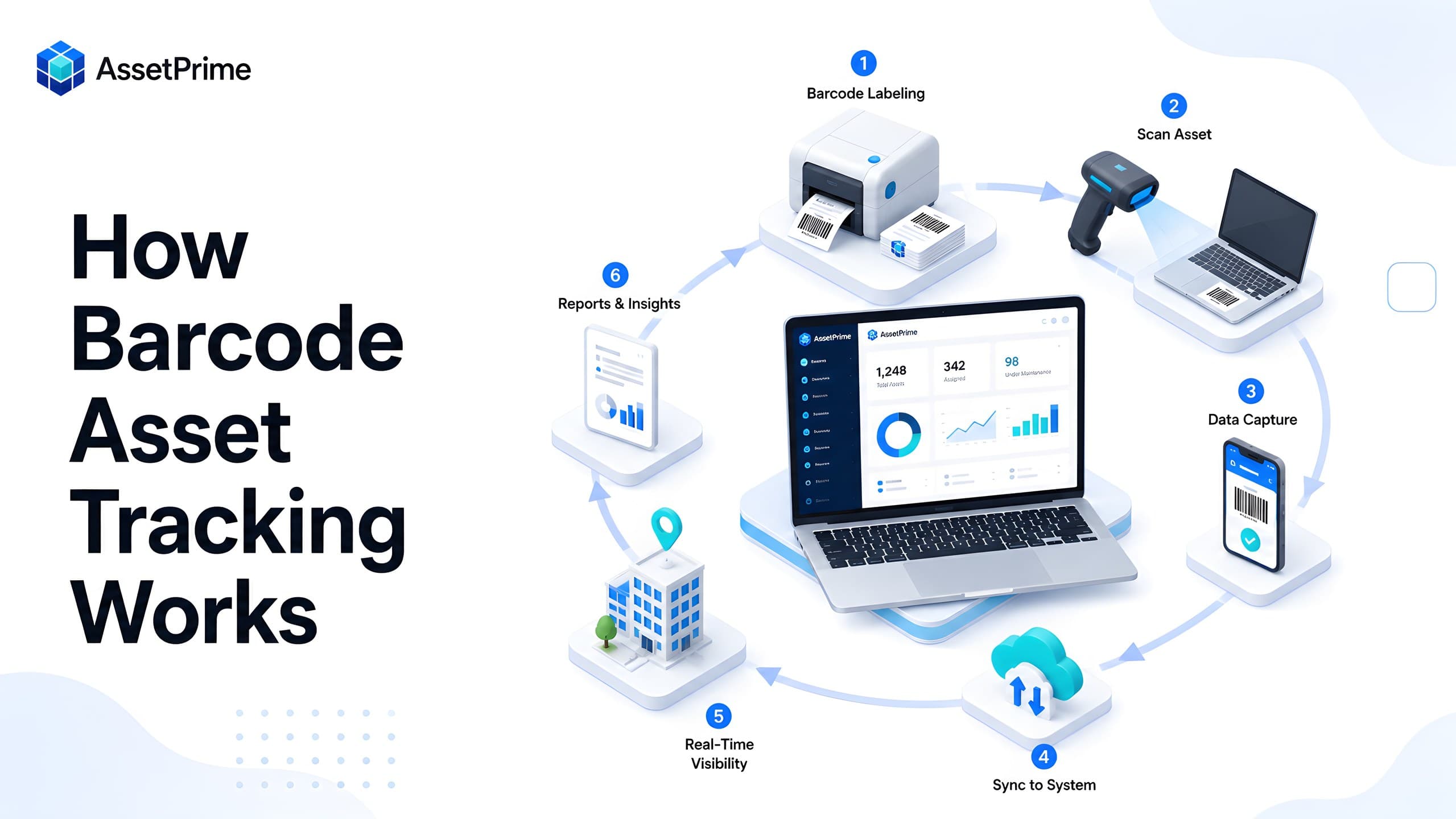
Barcode Tracking
How Barcode Asset Tracking Works: A Complete Guide for Modern Asset Operations
Read Article →