
What is an asset disposal policy?
An asset disposal policy defines how an organization reviews, authorizes, records and completes the removal of assets from use or ownership. It should explain who can recommend disposal, who approves it, how the physical item is handled and which evidence must be retained. A policy is a decision and accountability framework, not merely a status dropdown in an asset register.
A useful policy connects the real item, its asset ID, current custodian, branch or location, condition, disposal reason and final outcome. It should also identify the role of IT security, finance, facilities and any specialist handling team. The exact approval limits and document retention rules are determined by the organization and applicable requirements.
“You cannot control assets clearly when ownership, location, maintenance, and audit history live in separate files.”
Retirement, disposal, scrap, loss and destruction are not the same
Retirement means an asset is withdrawn from normal use. It may still be physically stored, awaiting redeployment, assessment or sale. Disposal is the eventual transfer or removal from organizational control, such as sale, donation, authorized recycling or destruction. An asset can be retired before it is disposed of; these events should not be treated as identical.
Scrap describes an unusable item or material designated for a scrap route. Destruction means physical destruction has occurred. A lost asset is not the same as a disposed asset: the item cannot be located, so the organization needs an investigation and appropriate loss record rather than invented disposal evidence. Consistent final states make stock, asset reports and audits more reliable.
What strong asset control should make visible
- ✓Where each asset is located today.
- ✓Who is responsible for the asset.
- ✓When it was purchased, moved, maintained, or disposed.
- ✓Which records are ready for audit, reporting, and decision-making.
When should an asset be considered for disposal?
Common triggers include irreparable damage, an uneconomical repair, persistent failure, obsolescence, safety concerns, replacement, end of support or a clear operational surplus. A trigger begins a review; it is not itself approval to remove an item from the register.
Ask whether the item can be repaired, reassigned, refurbished or transferred internally. Review condition, maintenance expense, remaining use, contractual obligations and the consequences of taking it out of service. Record the reason in plain language so a reviewer can understand the decision later.
Choose the appropriate disposal route
An organization may use resale, trade-in, internal redeployment, donation, return to a supplier, recycling, scrap recovery or approved destruction. The suitable route depends on condition, ownership, security, value and applicable rules. Internal redeployment is normally a movement or reassignment, not disposal from the organization.
Document the selected route before handing over the item. Where a licensed handler, recycling certificate, buyer receipt or destruction evidence is required by policy or law, obtain it and associate it with the transaction. Do not treat a recycling symbol or a change of system status as proof of compliant disposal.
Define responsibilities and approvals before acting
The department or custodian usually identifies an item for review. An asset controller or operations owner verifies identity and physical condition. Finance reviews book value, proceeds, loss and accounting treatment where relevant; IT security decides the data-handling requirement for devices holding information. An authorized approver makes the disposal decision under the organization’s policy.
Set approval thresholds and segregation-of-duties rules appropriate to your organization. For higher-value or sensitive equipment, consider independent verification before release. These are policy recommendations: AssetPrime’s disposal records should not be mistaken for an automatic enforcement of every organization’s approval matrix.
Verify the item and its records before disposal
Match the physical item to the register. Confirm asset code and, for serialized equipment, the instance ID, serial number and barcode where available. Review its branch, exact location, department or custodian, condition and any outstanding assignment or service movement. A record marked “in stock” should not be disposed of without confirming what is physically present.
Look at the asset’s purchase and maintenance history and any warranty, AMC, insurance or depreciation context relevant to the decision. If an item is missing, damaged, on loan or under repair, resolve the discrepancy or record the exception before choosing a final lifecycle action.
Protect data and manage environmental risks
Before releasing laptops, servers, phones, storage devices, printers or other equipment that may hold data, follow an approved data-sanitization or media-destruction process. Identify storage media, backups, retained records, access credentials and relevant security controls. Keep evidence of completion appropriate to the data sensitivity and applicable policy. An ordinary factory reset should not automatically be treated as sufficient sanitization.
For batteries, electronics, chemicals, medical equipment and other controlled materials, involve the appropriate safety or environmental owner. Disposal, recycling, transport and documentation requirements vary by jurisdiction and asset type. This guide is operational guidance, not legal, environmental or information-security certification advice.
Handle serialized assets and quantity-based stock correctly
For a serialized asset, identify the exact unit or instance being retired, lost, destroyed or disposed of. Two identical laptops may have different custodians, locations and histories. Confirm the serial or instance code rather than closing the entire asset type because one unit is leaving service.
For quantity-based stock, verify the affected asset type, source location, correct unit of measure and exact quantity. Disposing of five damaged chairs from a balance of 30 should not remove all 30. Reconcile the quantity change with the location’s remaining stock. The same broad policy applies to both tracking methods, but the unit of evidence differs.
Complete the physical handover and keep evidence
Record the disposal date, method, quantity or unique item identity, source location, receiving party and reference documents. An authorized pickup, transfer to a recycling contractor or destruction event should have evidence showing what happened and who took responsibility. If destruction or data sanitization is pending, do not describe it as already completed.
After the physical event, update the operational lifecycle state and reconcile location, custody and stock visibility. Retain the disposal history instead of simply deleting the asset record. This makes it possible to answer who approved the action, what left the site, when it happened and why.
Review book value, sale proceeds and accounting treatment
Before closing a financially controlled asset, finance should review the recorded cost, current book value, accumulated depreciation where available and any sale, scrap or trade-in proceeds. A disposal may produce a gain, a loss or no proceeds. The accounting entry and tax consequences depend on the organization’s accounting basis and relevant rules.
Operational disposal is not the same as posting a finance-ledger write-off. AssetPrime can hold value and disposal context for operational tracking, but this article does not claim that the software automatically produces accounting-compliant journal entries or determines local tax treatment.
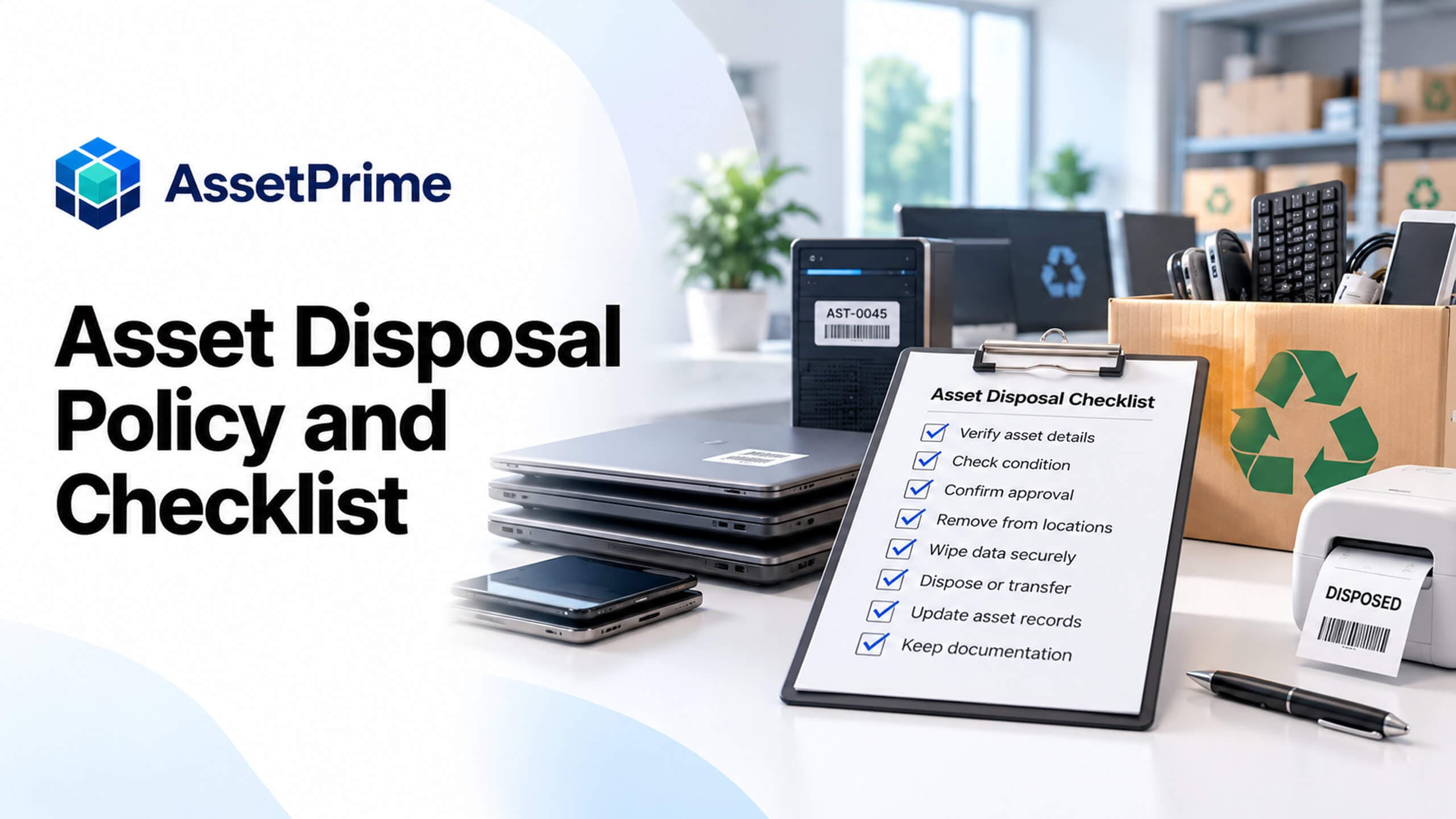
Use this 12-point asset disposal checklist
Use the checklist below as an operational control before marking an item or quantity as finally disposed of. A check should only be considered complete when the corresponding action has actually occurred; pending approval, data wiping or physical collection should remain visibly pending.
Organizations can adapt this list for IT equipment, office furniture, machinery, healthcare equipment and other asset types. Add local approval, safety, retention and accounting requirements where applicable.
12-point asset disposal checklist
- ✓1. Verify the physical asset, asset code and affected location.
- ✓2. Confirm the serialized instance or exact quantity and unit.
- ✓3. Record the condition, disposal reason and alternatives considered.
- ✓4. Review active assignments, service status and outstanding movements.
- ✓5. Check warranty, maintenance and other relevant asset history.
- ✓6. Obtain the approvals required by your organization’s policy.
- ✓7. Have finance review current value and possible proceeds, if relevant.
- ✓8. Complete required data sanitization and safety checks.
- ✓9. Confirm the authorized disposal method and receiving party.
- ✓10. Record the actual handover, disposal date and evidence.
- ✓11. Update the correct lifecycle state or location stock quantity.
- ✓12. Reconcile reports and retain the history and supporting documents.
What information belongs in an asset disposal record?
A practical record includes the asset code and name; tracking mode; serialized instance or serial number when relevant; branch and source location; affected quantity and unit; reason; condition; proposed and actual disposal routes; requested and approved dates; responsible people; final handover date and receiving party.
Where relevant, also record current book value, sale or scrap proceeds, financial outcome, supporting document references, data-sanitization evidence, contractor or recipient acknowledgement, and remarks. Keep references to the original asset and related movement history so that disposal never becomes an orphaned spreadsheet row.
Example: retiring laptops and disposing of damaged chairs
Suppose an IT team identifies two older laptops for retirement. The team verifies each unit’s unique code, checks whether either remains assigned, reviews data-sanitization needs and obtains the organization’s approval. Each individual laptop can then receive the correct final lifecycle outcome once its physical handover is evidenced.
Separately, facilities identifies six damaged chairs in a room holding 40 matching chairs. Under quantity-based tracking, the team confirms the six affected units and their location, follows the applicable approval and disposal process, and reconciles the resulting quantity balance. The operational records should reflect six disposed units, not 40 chairs or a fictitious serial number for each chair.
How AssetPrime supports disposal and retirement tracking
AssetPrime provides asset records for serialized units and quantity-based stock, branch and location context, assignment and movement history, maintenance and depreciation information, and disposal-related lifecycle records. Its Asset Disposal & Retirement feature page explains the operational states and connected history available in the software.
The important connection is traceability: a disposal decision can be reviewed against the asset that existed before it left service. Organizations remain responsible for defining their authorization policy, finance treatment, secure handling and applicable legal obligations. Use a product demonstration to confirm the exact records and workflows required by your team.
AssetPrime disposal workflow
Connect disposal with the full asset record
Explore how AssetPrime connects serialized instances, quantity-based stock, locations, lifecycle states, value and disposal history. Approval rules and compliance obligations remain defined by your organization.
Explore Asset Disposal & Retirement →Common asset disposal mistakes to avoid
Do not delete a record to make an asset disappear, classify an unlocated item as destroyed, treat planned disposal as completed handover, or skip approval and security checks because the equipment is old. Avoid using an asset type total where the action concerns a particular serialized instance or a small quantity at one location.
Other common gaps are missing evidence, unclear recipient identity, unresolved assignments, inconsistent dates and mixing financial write-offs with operational status changes. A short documented workflow is more reliable than a long policy nobody uses.
Final takeaway: close the lifecycle without losing the history
A good disposal process begins before an asset leaves the building. It starts with identification, review and authorization, then follows the chosen physical route and ends with reconciled records and retained evidence.
Use the same policy across departments, but apply serialized and quantity-based controls at the appropriate level. If you want to see how AssetPrime connects asset identity, location, movement, retirement and disposal information, explore the disposal feature page or request a demonstration.
Related AssetPrime Pages
Continue with related pages
Explore connected features, guides, solutions, and industry pages that support this topic.
FAQ
Frequently asked questions
What should an asset disposal policy include?
It should identify who can propose and approve disposal, which asset details must be checked, permitted disposal methods, security and finance responsibilities, required records and evidence, and how the final lifecycle status is reconciled.
What is the difference between retiring and disposing of an asset?
Retirement removes an asset from ordinary use. Disposal is the later sale, donation, recycling, transfer out of ownership or destruction of the item. They may occur at different times.
Can a lost asset be recorded as disposed of?
Not automatically. A missing item requires investigation and a loss record under the organization’s policy. Do not claim physical disposal or destruction without evidence.
How do I dispose of serialized assets?
Verify the specific asset instance, serial or barcode, custodian and location. Apply the authorized final action to the correct unit and retain the supporting approval and handover evidence.
How should quantity-based asset disposal be recorded?
Verify the asset type, source location, unit of measure and affected quantity. Record the approved removal and reconcile the location balance rather than closing all units of the asset type.
Does IT asset disposal require data wiping?
Devices that may contain organizational data need a security review and an approved sanitization or media-destruction method appropriate to the data and policy. Keep proof where required; a simple reset may be insufficient.
Is an asset disposal entry the same as an accounting write-off?
No. A disposal record tracks the operational lifecycle event. Accounting derecognition, gain or loss, depreciation and tax treatment are determined separately by the finance team and applicable rules.
Does AssetPrime set the disposal approval policy for my organization?
No. Organizations define who authorizes disposal and which evidence is required. AssetPrime provides operational asset, location, history and disposal tracking context that can support those procedures.
Continue Reading
Related articles
Asset Management
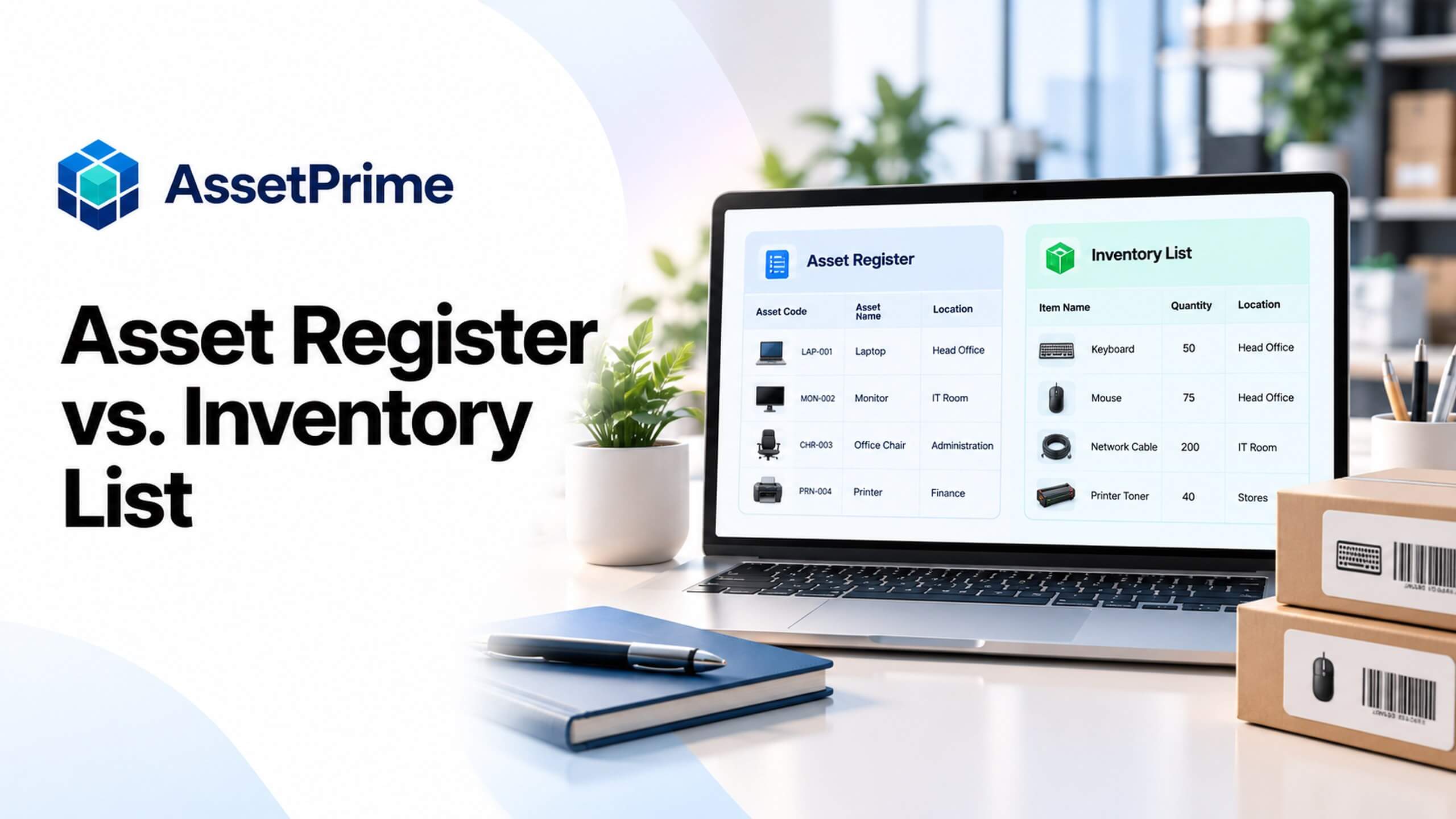
Asset Register vs. Inventory List: Differences, Examples and When to Use Each
Read Article →
Asset Management
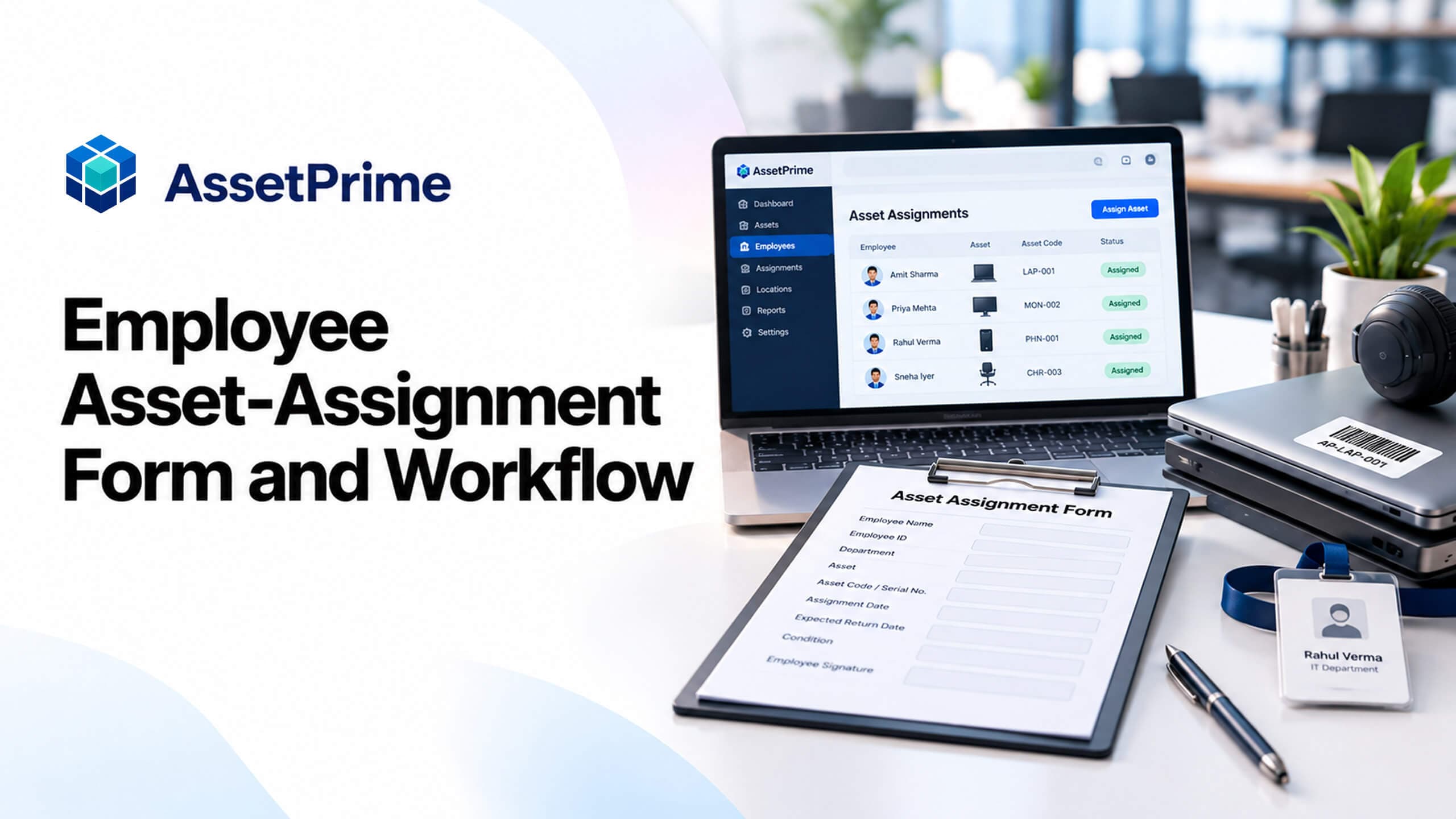
Employee Asset Assignment Form and Workflow: Fields, Handover and Returns
Read Article →

Asset Management
Serialized vs. Quantity-Based Asset Tracking: Which Should You Use?
Read Article →