

What is the asset receiving process?
Asset receiving is the controlled handoff between delivery and the asset records used by an organization. The receiving team confirms what physically arrived, checks its condition, records any differences and places accepted items into the correct stock or asset-tracking workflow.
A purchase record tells you what was ordered. A receiving record tells you what actually arrived. An asset register or stock record tells you what the organization can locate, assign, maintain and verify afterward. Keeping those stages distinct prevents equipment from appearing available before it has been checked.
This guide focuses on the receiving desk, storeroom and handover decisions. For supplier selection, purchase management and the wider lifecycle, see AssetPrime's separate procurement and asset management guide.
“The receiving record should tell you what arrived—not simply repeat what was ordered.”
Before delivery: prepare the receiving checklist
Confirm who is authorized to accept the delivery and where it will be inspected. Make the purchase order or approved request available where one exists, together with expected item descriptions, quantities, supplier details and any delivery instructions.
Check the receiving location and tracking approach in advance: will the incoming item increase quantity-based stock, or will each physical unit need its own serialized asset record? Arrange a safe inspection area and a temporary holding location for damaged or disputed items.
Prepare a consistent way to record the receiving date, delivery note or GRN reference, receiver, supplier and discrepancies. A GRN is a goods received note; the exact document name can vary by organization.
Four checks before confirming a delivery
- ✓Match the delivery and reference documents.
- ✓Count accepted units and flag discrepancies.
- ✓Capture serialized IDs or quantity-based stock correctly.
- ✓Confirm the receiving location and next owner.
Step 1: verify the delivery against purchase and supplier records
Match the supplier, purchase reference when applicable, delivery note, item descriptions and units of measure. Verify that the delivered model or specification is the one expected, rather than accepting a matching quantity with the wrong equipment type.
Where there is no purchase order, use the organization's approved receiving reference and document the source of the items. Do not invent a purchase number simply to complete the receipt. Keep the supporting invoice, delivery note or other evidence according to internal policy.
Step 2: count what physically arrived
Count each item or package using the correct unit, then compare ordered, previously received and newly received quantities. Do not mark the entire purchase as received because the supplier has issued a full invoice.
For example, if 20 monitors were ordered but only 12 arrive, record the 12 that are actually accepted and identify the 8 still outstanding. Subsequent deliveries should have their own receiving context so the organization can reconcile totals without double counting.
When items are packed in cartons, convert carton counts into the agreed asset unit carefully. Ten cartons containing two devices each is different from ten devices; the unit of measure belongs on the checklist.
Choose the right tracking method
Serialized assets or quantity-based stock?
Before receiving equipment, decide whether each unit needs its own identity or whether controlling quantities by location is sufficient.
Compare serialized and quantity-based tracking →Step 3: inspect condition and record discrepancies
Inspect outer packaging, the asset itself and relevant accessories before releasing items for use. Depending on the equipment and local procedures, this may include checking visible damage, included parts, model labels, serial numbers and basic acceptance tests.
Record shortages, over-deliveries, missing accessories, wrong models and damaged items separately. Note how many units were accepted, held for inspection or rejected; capture photographs and supplier communications when appropriate.
Do not treat a damaged unit as ready for assignment solely because it is physically in the building. Store disputed units in a designated area until the responsible team decides whether to accept, return or investigate them.
Step 4: choose serialized or quantity-based receiving
Serialized tracking is suitable when each unit needs a distinct identity and lifecycle record: a laptop, diagnostic device or specialized tool, for example. Capture the identifier for each accepted unit and verify the serial number or barcode against the physical label. Two laptops purchased together may share a model but should not share an individual instance ID.
Quantity-based receiving fits interchangeable items managed as a count, such as a group of matching chairs or supplies that the business controls by location and quantity. Record the accepted quantity and unit accurately so the stock balance reflects the delivery.
An organization may use both approaches. The receiving decision affects how assets are identified, moved, assigned and later verified; it is not simply a choice of label design.
Step 5: record asset identity, location and supporting details
Create or update the relevant asset or stock record only for accepted units. Capture the asset code, asset category, model, supplier or purchase context, cost where available and the receiving date. For serialized equipment, record the individual serial number, instance identity and barcode value where applicable.
Record the branch and exact receiving location rather than selecting a default branch out of convenience. Add department or custodian details when the equipment is actually issued or assigned; do not confuse a receiving location with the final user's location.
Where required, attach the delivery note, invoice, inspection evidence or warranty details to the appropriate record. Keep a clear distinction between information entered at receiving and information confirmed later during deployment.
Step 6: close exceptions before final handover
Reconcile what was expected, delivered, accepted, rejected and still outstanding. Give every discrepancy a responsible owner and next action: supplier clarification, replacement, return, additional inspection or correction to the receiving record.
Once equipment is accepted, record whether it stays in the receiving store, moves into available stock or is issued to a department or employee. Capture subsequent movements and assignments as their own transactions instead of silently changing the original receiving details.
Asset receiving checklist: 12 checks before you close a receipt
Work through the 12 receiving checks below before confirming that a delivery is fully accepted. Each check should correspond to a fact that the receiver can verify or an exception that has been recorded for follow-up.
A receiving checklist should help staff make a decision, not just tick boxes. If an item is short, incorrect or damaged, document the exception and follow the organization's approval and supplier-resolution process before releasing it.
12-point asset receiving checklist
- ✓1. Confirm the receiver and receiving date.
- ✓2. Match supplier and purchase or delivery references.
- ✓3. Verify item descriptions, models and specifications.
- ✓4. Confirm the correct unit of measure.
- ✓5. Count the quantity physically delivered.
- ✓6. Check any earlier partial receipts.
- ✓7. Inspect item condition and included accessories.
- ✓8. Record damaged, short, excess or rejected units.
- ✓9. Choose serialized or quantity-based tracking.
- ✓10. Record asset or instance IDs and serial numbers as needed.
- ✓11. Confirm the branch and exact receiving location.
- ✓12. Reconcile accepted units and document the next handover.
Worked example: laptops and office chairs in one delivery
A branch expects 10 laptops and 25 office chairs. The delivery brings 10 laptops and 20 chairs. Inspection finds one laptop with visible damage. The team records nine accepted laptops, one laptop held for a decision, 20 accepted chairs and five chairs still outstanding.
For the nine accepted laptops, the team verifies individual serial numbers and prepares individual asset identities. The office chairs can be received as a quantity of 20 in the branch's designated store, if the organization's policy uses quantity-based tracking for that category.
After the damaged laptop is resolved, its acceptance or return can be recorded through the organization's receiving process. No one should enter ten available laptops or 25 available chairs simply because those quantities appeared on the original purchase.
Common receiving mistakes to avoid
Common errors include equating ordered quantities with received quantities, mixing cartons and units, using a generic store for every receipt, reusing a serial or barcode identifier, and assigning equipment before it has passed inspection.
Another frequent problem is correcting discrepancies only in email while leaving the asset register unchanged. If a supplier delivers a replacement or a second partial shipment, the receiving and stock records should reflect the physical events rather than relying on somebody's memory.
How AssetPrime supports asset receiving workflows
AssetPrime connects purchase and receiving information with the operational asset register. Its documented workflows distinguish quantity-based stock from serialized asset instances, preserve branch and location information, and support subsequent movements and assignments.
Teams can record actual received quantities and connect accepted items to the relevant stock or individual asset records. Receiving history and downstream stock or instance records help users understand what entered the organization and where that equipment went afterward.
The checklist on this page is general operational guidance, not an interactive receiving screen or a promise that every organization's approval procedure is automated. To assess fit, review the Procurement Management, Serialized Asset Tracking and Quantity-Based Asset Tracking feature pages, or request a demonstration of your own receiving scenario.
What to review after the first month
Review mismatches between purchasing and accepted quantities, the number of receipts with unresolved exceptions, missing serial identifiers, incorrect locations and assets that were received but never properly issued or deployed.
Sampling a few receipts end to end—from delivery note through receiving entry, stock or instance record and final location—helps verify that the process remains practical for the people doing the work.
Related AssetPrime Pages
Continue with related pages
Explore connected features, guides, solutions, and industry pages that support this topic.
FAQ
Frequently asked questions
What is an asset receiving checklist?
It is a set of checks used when equipment arrives to verify reference documents, quantities, condition, identity, receiving location, discrepancies and the handover into stock or the asset register.
Is an asset receiving record the same as a purchase order?
No. A purchase order or purchase record describes what was requested or purchased. A receiving record describes what physically arrived and was accepted on a particular delivery.
What should we do if only part of the order arrives?
Record the quantity actually accepted, keep the outstanding quantity visible and document later shipments separately. Do not treat the full ordered quantity as available stock.
How does serialized receiving differ from bulk receiving?
Serialized receiving captures an identity for each individually tracked unit. Quantity-based receiving records accepted units as a stock quantity. Both approaches need accurate location and receiving history.
Should damaged assets be added to available stock?
Not as ready-to-use equipment. Record the damage, hold the item for inspection or supplier resolution, and follow the organization's process for accepting, rejecting or returning it.
What details should be recorded for a new asset?
Typical details include asset code or identifier, asset name, category, supplier or purchase reference, received quantity, receiving date, branch, location, condition and any serial or barcode information needed for the tracking method.
Can AssetPrime support both quantity-based and serialized receiving?
Yes. AssetPrime's documented receiving workflows can update quantity-based stock and create serialized asset instances, with location context and subsequent lifecycle tracking.
Continue Reading
Related articles

Asset Management
Serialized vs. Quantity-Based Asset Tracking: Which Should You Use?
Read Article →

Asset Management
What Is Asset Management Software? A Complete Guide for Modern Organizations
Read Article →
Asset Tracking
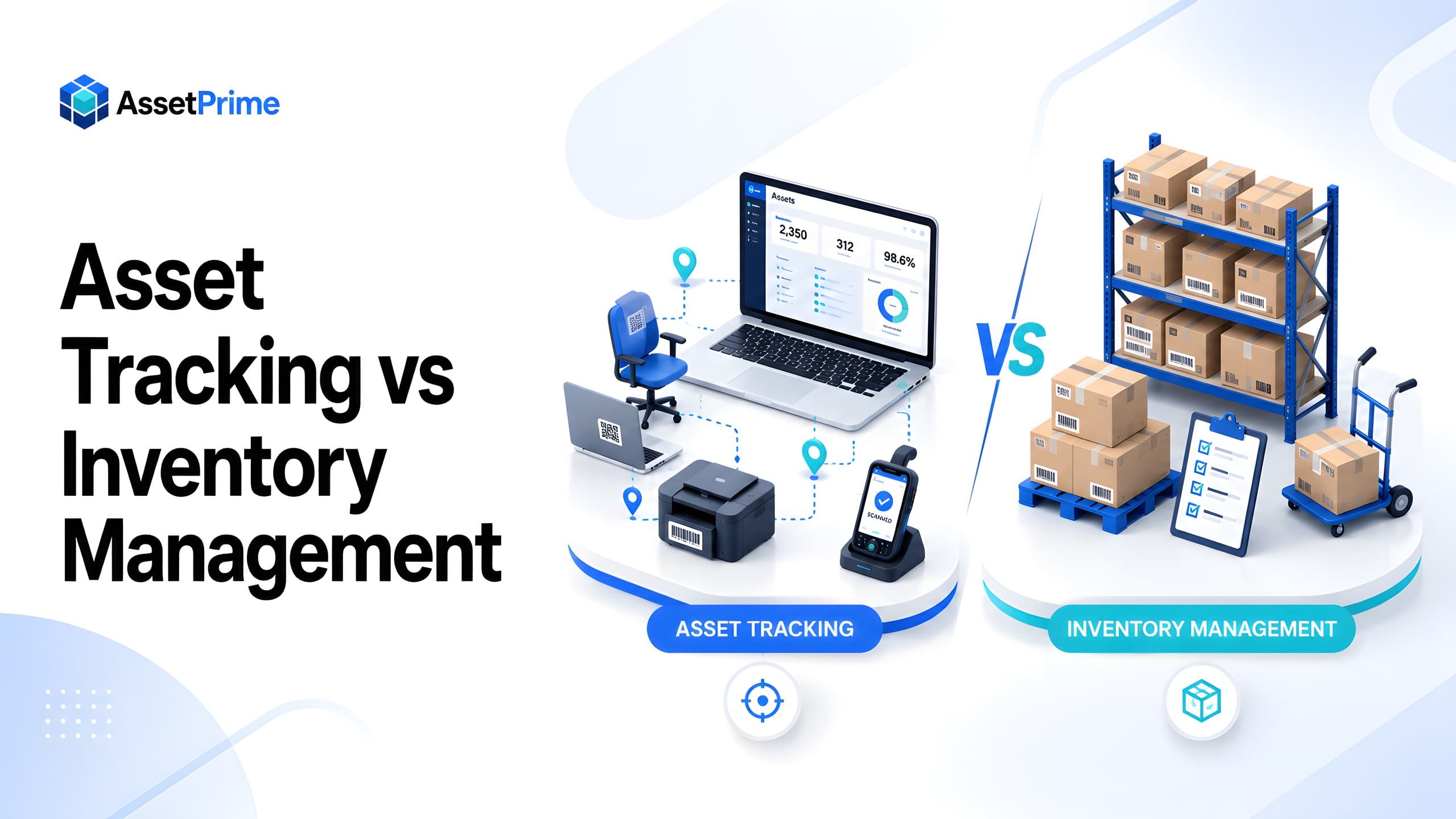
Asset Tracking vs Inventory Management: Key Differences for Modern Businesses
Read Article →