
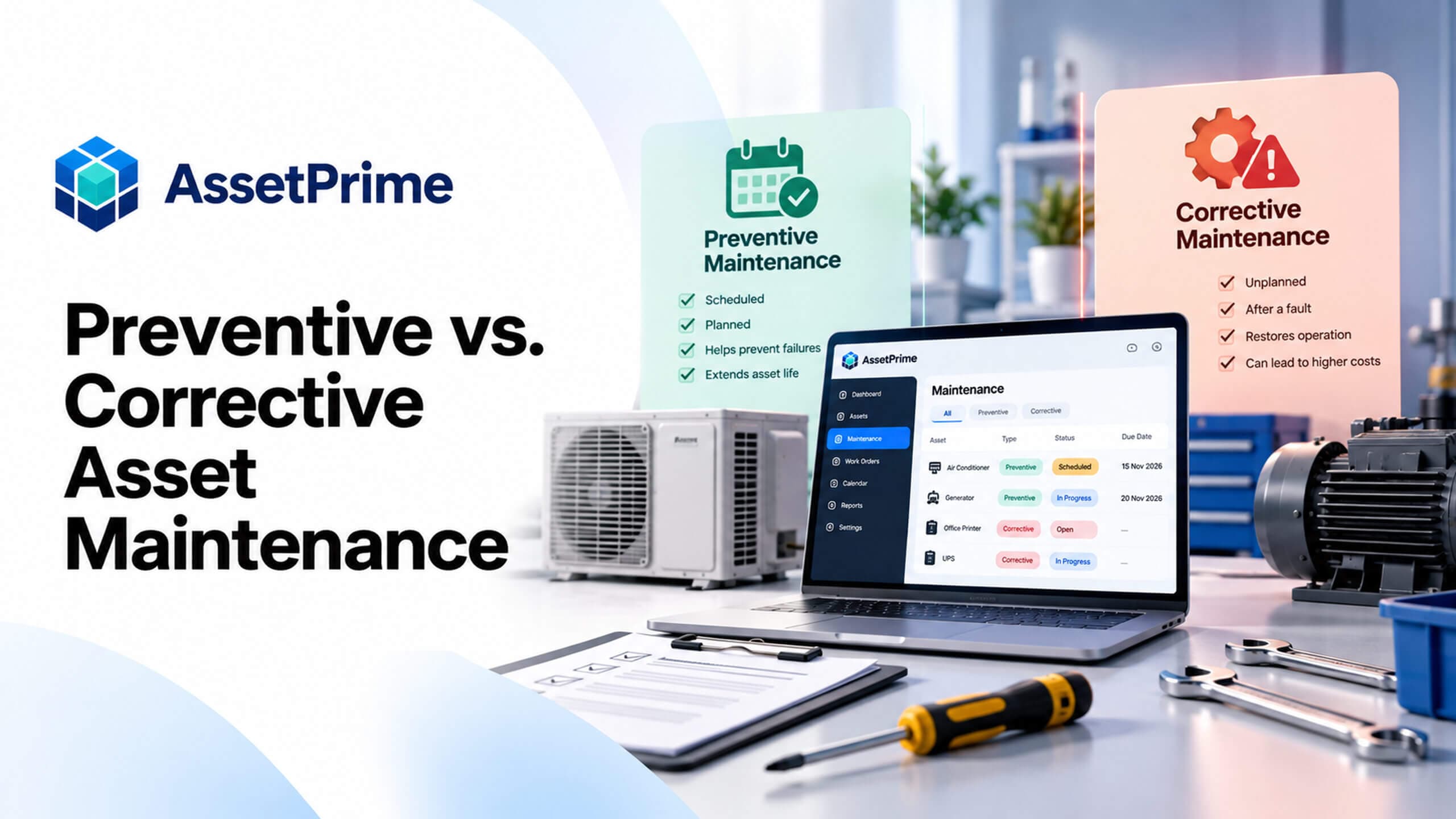
What is the difference between preventive and corrective maintenance?
Preventive maintenance is work planned before a known failure, usually at an agreed date, usage interval or inspection point. Corrective maintenance starts after a fault, defect or unacceptable condition has been identified. Both may be necessary to keep equipment safe, serviceable and available.
The distinction is the trigger, not simply whether someone booked a technician in advance. A known fault repaired during next week’s planned service window is still corrective work. A scheduled inspection intended to find deterioration before failure is preventive work.
This guide compares the two methods, shows how teams can decide what to do, and explains what belongs in a usable maintenance history. For contract coverage, vendor renewals and AMC expiry, see the separate Maintenance and AMC Management Guide.
“You cannot control assets clearly when ownership, location, maintenance, and audit history live in separate files.”
What is preventive maintenance?
Preventive maintenance is scheduled or condition-triggered work carried out to reduce the likelihood of breakdown or deterioration. Typical activities include inspection, cleaning, lubrication, calibration, replacement of wear items and verification against the manufacturer’s instructions.
A facilities team might inspect air-conditioning equipment on a planned cycle; an IT team might periodically check UPS battery health. The right frequency depends on risk, usage, manufacturer guidance, safety requirements and previous maintenance outcomes. More frequent service is not automatically better.
Every planned task should name the affected asset or stock group, responsible person, due date, scope of work and expected evidence of completion.
What strong asset control should make visible
- ✓Where each asset is located today.
- ✓Who is responsible for the asset.
- ✓When it was purchased, moved, maintained, or disposed.
- ✓Which records are ready for audit, reporting, and decision-making.
What is corrective maintenance?
Corrective maintenance begins when a defect or fault is discovered. Work may include diagnosing the problem, replacing parts, adjusting settings, arranging a vendor repair, testing the equipment and returning it to service.
Not all corrective maintenance is an emergency. A damaged chair identified during an inspection may be repaired on a scheduled date. A critical server failure may require an immediate response. Both are corrective because the defect already exists.
A useful repair record states the reported symptom, affected asset, priority, downtime or operational impact, assigned vendor or technician, actions taken, cost, final condition and closure evidence.
Preventive vs. corrective maintenance: side-by-side comparison
Use the following comparison to classify a job before assigning it. The table describes typical operational practice; the correct procedure depends on the asset, its risk and your maintenance policy.
Preventive work is generally easier to plan, while corrective work responds to discovered faults. A mature maintenance program uses both rather than treating either as a universal replacement for the other.
| Consideration | Preventive maintenance | Corrective maintenance |
|---|---|---|
| Trigger | Planned time, usage or inspection criteria | An identified fault, defect or failure |
| Main objective | Reduce failure risk and deterioration | Restore acceptable condition or function |
| Timing | Scheduled or condition-triggered before a known failure | Immediate or scheduled after the defect is known |
| Typical activity | Inspection, lubrication, routine calibration | Diagnosis, repair, replacement and testing |
| Priority | Based on risk, criticality and service plan | Based on fault severity and operational impact |
| Useful records | Due date, task scope, completion, next review | Symptom, diagnosis, repair, cost and closure |
| Useful measures | Overdue work, completion and reliability outcomes | Recurring faults, open jobs, time to restore |
Common examples across IT, facilities and operations
Laptop: a scheduled hardware-health inspection is preventive; replacing a failing keyboard after a user reports missed keystrokes is corrective. One serialized laptop should retain its own service history and assignment context.
Air conditioner: planned filter cleaning is preventive; repairing an observed refrigerant leak is corrective. Record the unit identifier, service location and actual maintenance activity rather than a generic note such as “AC repaired.”
Office chairs: periodic safety inspection of a location’s chair stock is preventive; repairing ten identified damaged chairs is corrective. For quantity-based stock, capture the affected quantity and location instead of pretending that each interchangeable unit has a unique serial-number record.
Production equipment: routine lubrication under a maintenance plan is preventive; repairing a defective bearing after vibration or inspection identifies a problem is corrective. If a defect is detected early, the corrective job can still be scheduled before total failure.
When should an organization prioritize preventive maintenance?
Prioritize assets whose failure could cause safety risks, major downtime, expensive secondary damage, compliance problems or disruption to essential services. Manufacturer requirements, operating hours, equipment criticality and reliable past failure data help determine appropriate intervals.
Start with the highest-risk maintainable assets, define a reasonable servicing task and owner, then check whether the task actually reduces faults or improves reliability. Do not assign calendar-based servicing blindly to every item; some low-risk assets may be better managed through inspection and corrective response.
When is corrective maintenance the right response?
Corrective maintenance is appropriate whenever a fault or defect is confirmed, whether it was reported by an employee, found during inspection or detected during a planned service. Response urgency should reflect safety, service impact, redundancy, repair feasibility and available resources.
For noncritical equipment, a planned corrective repair may avoid unnecessary disruption. For high-impact failures, isolate unsafe equipment and escalate promptly according to the organization’s procedures.
Where faults recur after repeated closures, examine the root cause and repair quality rather than recording another identical “completed” job and assuming the problem is solved.
How to organize both types in one asset maintenance workflow
1. Identify the item or affected stock group and its location. For serialized assets, use the specific unit identity. For bulk assets, identify the asset type, affected quantity and relevant location.
2. Select preventive or corrective based on the work trigger. Add a clear description, due or reported date, priority and responsible person. If a preventive inspection discovers a defect, record the repair work distinctly so reporting remains meaningful.
3. Carry out the work, record service dates, vendor, notes, costs and current state, and confirm whether the equipment can safely return to use.
4. Review overdue planned work and open faults separately. Use repeat failures, service expense and operational impact to decide whether an interval, repair or replacement strategy needs updating.
What information should each maintenance record contain?
Keep the asset code or instance identity, branch, location, maintenance type, task or reported issue, scheduled or reported date, assigned provider or technician, status, work performed, cost and completion date together in the same record wherever supported.
For scheduled service, record the planned scope and next service requirement. For fault-based work, capture the symptom, diagnosis, corrective action and outcome. Attach supporting documents or external service references where appropriate.
If downtime, parts, warranty coverage or safety sign-off matters to your organization, include them in your operating procedure and confirm how your chosen software handles them. Do not infer that a field is automatically captured merely because the equipment has a barcode.
How to measure maintenance performance fairly
Useful measures include the number of overdue preventive tasks, on-time completion, open corrective work, recurring faults, time unavailable for service, and maintenance spend relative to asset importance and age.
A high number of completed preventive jobs does not prove that equipment is more reliable. Compare results against breakdown frequency, downtime and safety outcomes. Likewise, a low corrective job count may reflect poor reporting rather than excellent reliability.
Review differences by branch, equipment category and criticality so a heavily used machine is not compared without context against a low-use office item.
How preventive and corrective work interact with warranty and AMC
Warranty and Annual Maintenance Contracts describe commercial coverage; preventive and corrective describe maintenance activities. A repair might be corrective while covered under an AMC, or preventive while paid separately by the organization.
Before authorizing vendor work, confirm coverage conditions, supplier responsibilities, required records and approval rules. Preserve the service record even if the work is completed under warranty.
For contract periods, renewal follow-up and cost visibility, use the Maintenance and AMC Management Guide rather than treating an AMC as a separate maintenance type.
An eight-point preventive and corrective maintenance checklist
Use this checklist when introducing a shared maintenance process or reviewing current procedures. It helps teams separate scheduled work from known defects without losing essential asset context.
The checklist is an operational recommendation. Your organization remains responsible for approvals, technician procedures, safety decisions and compliance requirements.
Eight checks for a clearer maintenance process
- ✓Identify the exact serialized asset or the quantity-based asset group and affected location.
- ✓Classify the task using its real trigger: planned prevention or an identified defect.
- ✓Record the due date or reported date, urgency, responsible person and work description.
- ✓Confirm manufacturer guidance, safety requirements, and warranty or AMC conditions.
- ✓Keep open, under-repair and completed states clear to authorized teams.
- ✓Document work performed, dates, provider, actual cost and completion outcome.
- ✓Review recurring faults and overdue preventive tasks separately.
- ✓Update the asset history and adjust future service plans when the evidence warrants it.
How AssetPrime supports asset maintenance management
AssetPrime’s documented Maintenance & AMC Management functionality includes structured maintenance records, scheduled service visibility, under-repair and completed states, maintenance costs, and reporting. Related workflows connect maintenance records with asset information, branches, locations and AMC coverage.
The product supports maintenance activity for serialized units and quantity-based assets. This is important when a specific laptop needs an individual history but maintenance affects a measured quantity of identical assets in one location.
This guide is a comparison of maintenance approaches, not a claim that AssetPrime automatically predicts faults or performs repairs. Review the Maintenance & AMC Management feature page and request a workflow demonstration using equipment types relevant to your team.
Practical next steps for your maintenance program
List critical equipment and define which servicing activities are preventive. Agree how faults will be raised, prioritized, repaired and closed. Keep the trigger for each maintenance record clear, then review the mix of work after an initial operating period.
If recurring faults remain high, revisit inspection frequency, service scope, operator practices or repair quality. If preventive work consumes time without measurable benefit, review the interval instead of adding more tasks.
Link maintenance decisions to the actual asset record, so the next owner or technician can understand what was done, what remains open and why.
Related AssetPrime Pages
Continue with related pages
Explore connected features, guides, solutions, and industry pages that support this topic.
FAQ
Frequently asked questions
What is the main difference between preventive and corrective maintenance?
Preventive maintenance is scheduled or condition-based work intended to reduce the likelihood of failure. Corrective maintenance is work triggered by an identified fault or defect, whether the repair happens immediately or at a planned time.
Is corrective maintenance always unplanned or emergency work?
No. Corrective work can be scheduled after a defect is identified. Emergency breakdown repair is one form of corrective maintenance, not the definition of all corrective work.
Can the same asset need both preventive and corrective maintenance?
Yes. Equipment can follow a preventive service schedule and still develop defects that require corrective repair. Keep both activities linked to the asset history.
Is preventive maintenance always cheaper than corrective maintenance?
Not necessarily. Preventive service involves planned expense and may be unnecessary for some low-risk assets. Compare maintenance cost with downtime, safety, reliability and actual failure outcomes.
What should be recorded after a corrective repair?
Record the asset identity, symptoms, fault or diagnosis, work performed, technician or vendor, dates, cost, test or acceptance outcome, status and remaining issues where relevant.
Should maintenance be tracked differently for serialized and bulk assets?
For serialized equipment, link work to the specific unit. For quantity-based assets, identify the asset type, affected quantity and location so the activity can be traced without assuming each unit has an individual serial identity.
How does AMC differ from preventive maintenance?
An AMC is a service-coverage contract, whereas preventive maintenance is work carried out to reduce future failure risk. An AMC may cover preventive service, corrective repairs or both, depending on its terms.
Does AssetPrime support preventive and corrective maintenance records?
AssetPrime documents scheduled maintenance visibility, repair status and maintenance records for serialized and bulk assets, together with service costs and reporting. Specific workflows should be reviewed in a product demonstration.
Does AssetPrime automatically predict maintenance failures?
The documented functionality reviewed for this guide does not establish automated predictive-failure detection. The article discusses preventive planning and corrective service tracking, not AI-based fault prediction.
Continue Reading
Related articles
Asset Management
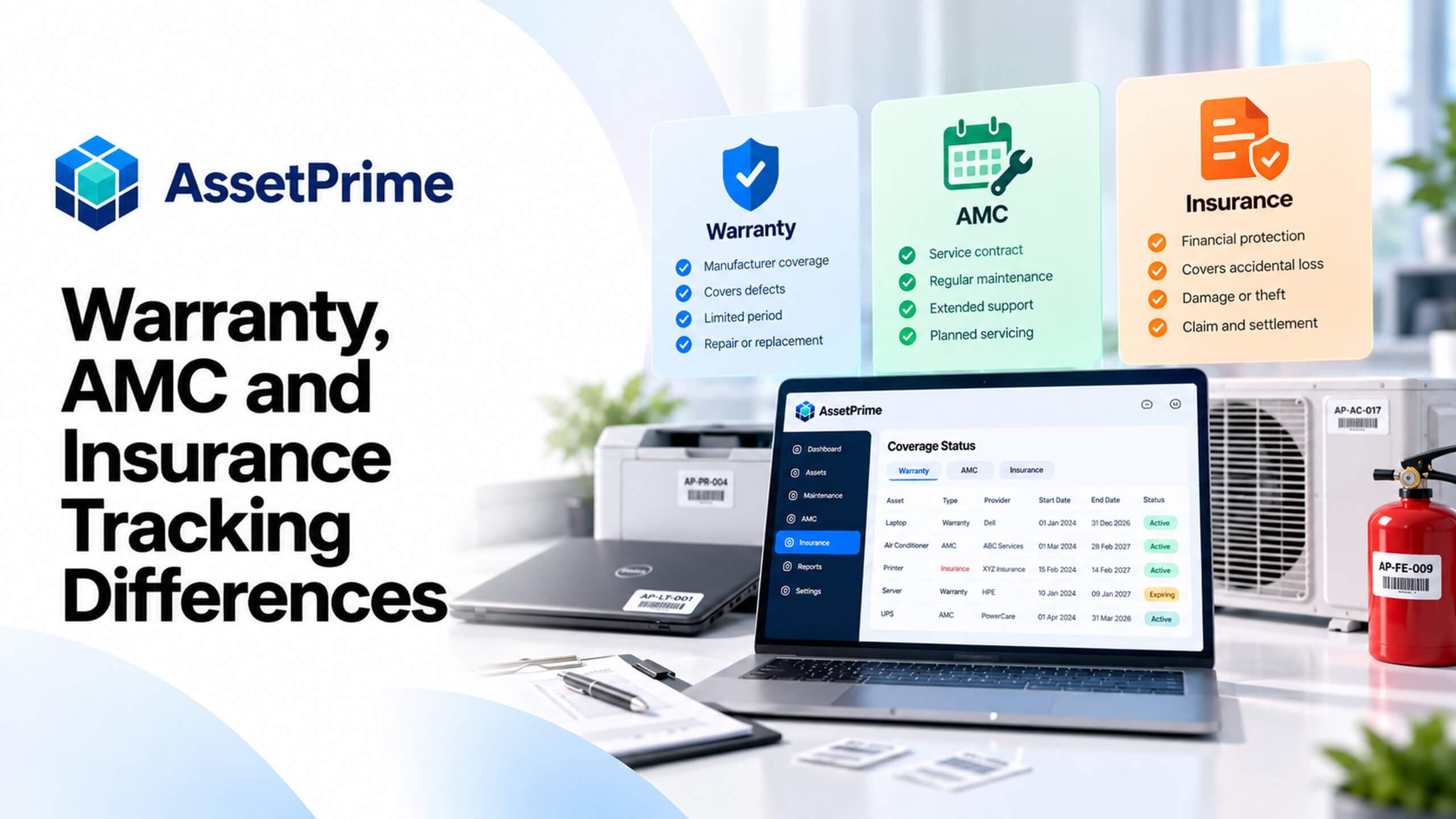
Warranty vs. AMC vs. Insurance: Asset Coverage and Tracking Guide
Read Article →

Asset Management
On-Premise vs. Cloud Asset Management Software: Which Fits Your Team?
Read Article →
Asset Management
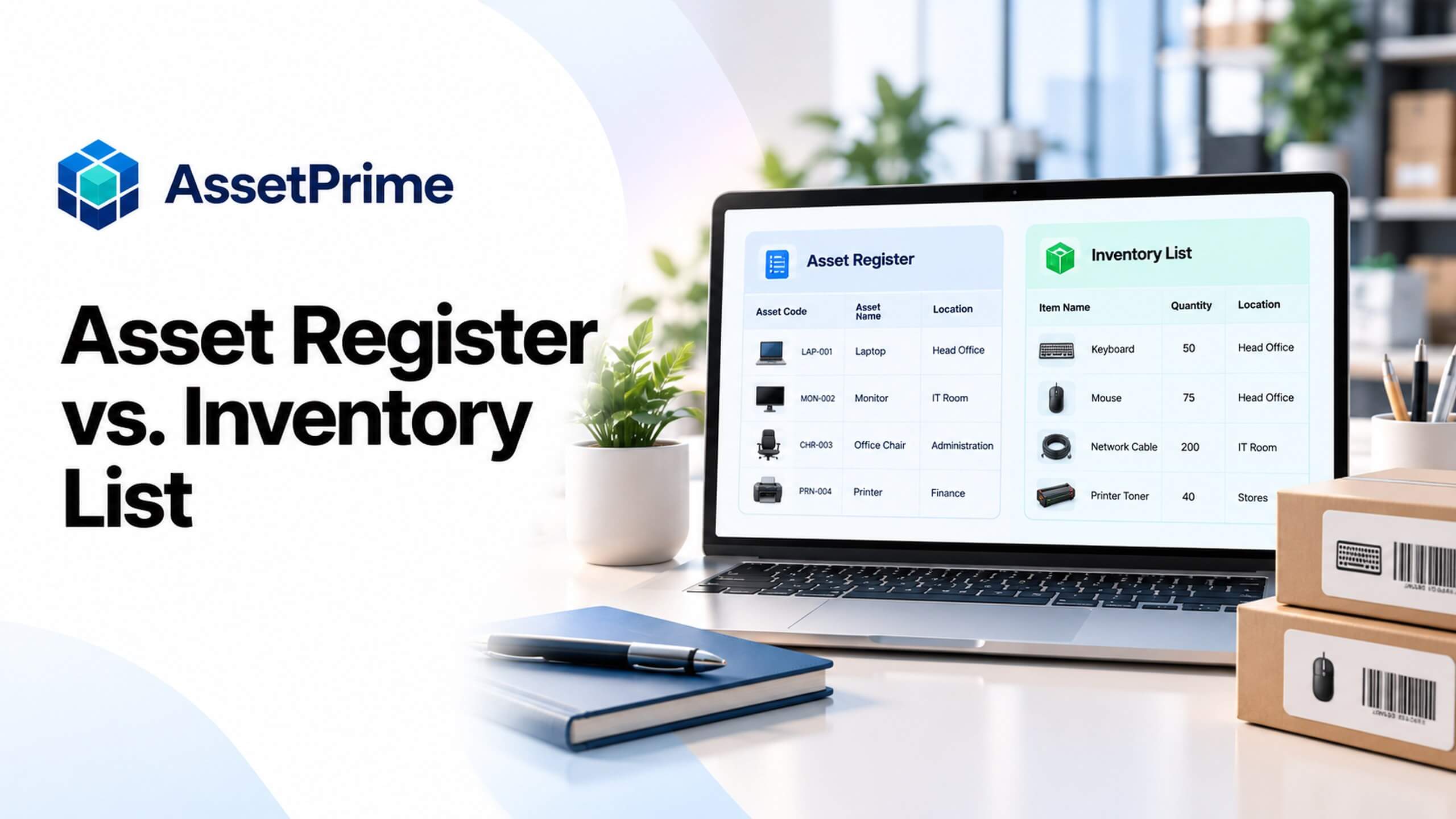
Asset Register vs. Inventory List: Differences, Examples and When to Use Each
Read Article →